Conclave Authority
The Aurent Orders

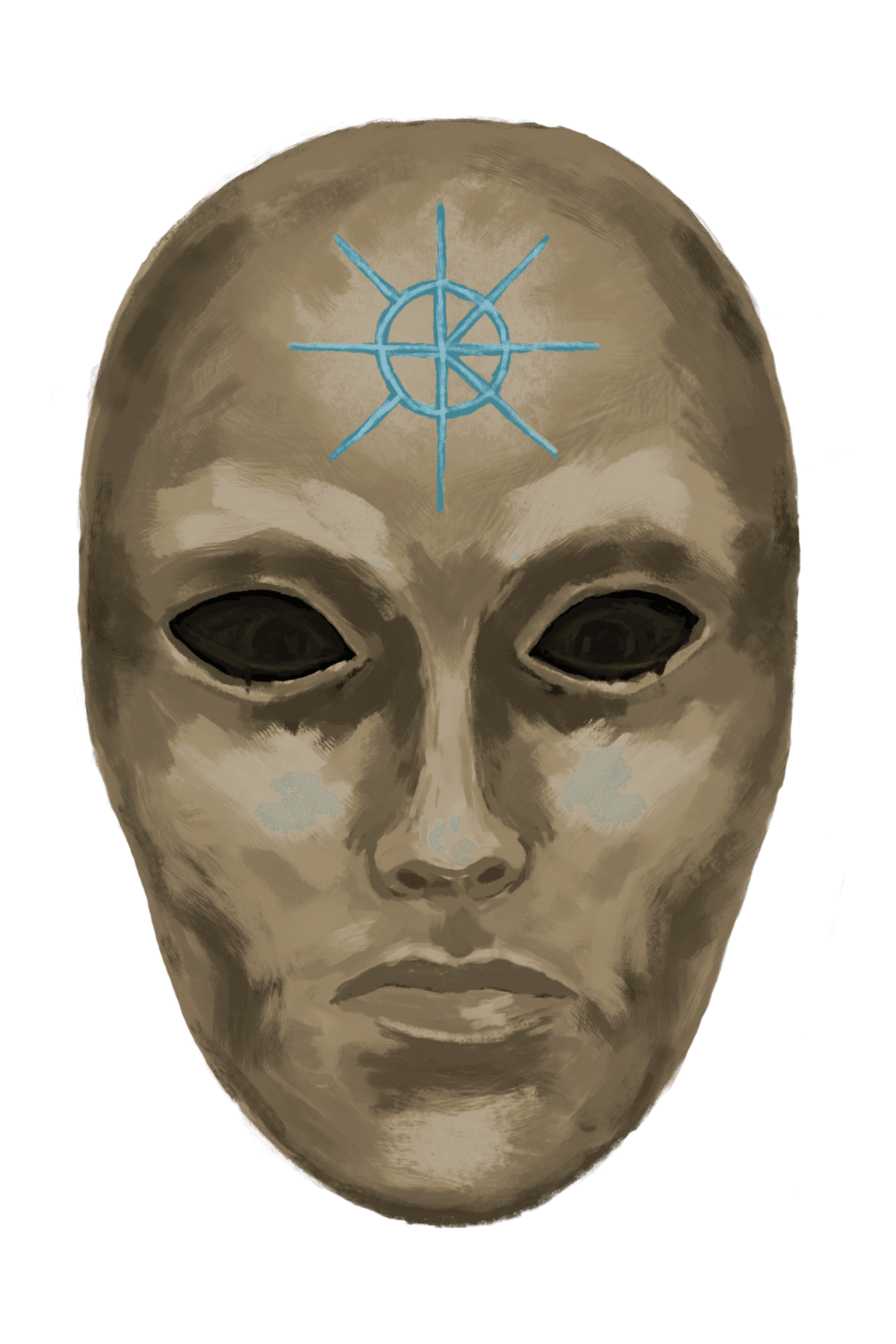
The Aurent Orders are the masked instruments of Conclave authority, four specialised Orders bound by a shared belief in the supremacy of the soulmark. Once unified as the visible hand of divine judgement, they remain among Arynbel’s most powerful forces even as their mandates and interpretations increasingly diverge.
“A mask grants no mercy, only purpose. An Aurent’s face is not their own, it is the Weave’s.”
Order Creed, commonly spoken before judgement is passed
The Aurents were once the hands of divine will, faceless and feared as they carried out the judgement of Crown and Conclave. Their ritual masks erased private identity, their soulmarks defined sacred purpose, and their authority was treated as absolute. They did not merely enforce law. They embodied the visible certainty that law still answered to the divine order beneath it. When an Aurent entered a village, stood at a gate, or passed through a shrine court, their presence was understood not as personal intervention but as fate made procedural. In older centuries, this gave the Orders a fearsome clarity. They did not need to persuade. They only needed to arrive.
That unity has broken. With the monarchy ended and Elara silent, the Aurent Orders no longer speak with one voice. Some cling to doctrine with ruthless certainty, some bend toward investigation or internal correction, some deepen their rites until ritual itself becomes replacement for revelation, and some have grown so dependent on secrecy and interpretation that even fellow Aurents fear what they might be hearing in the silences between decrees. The fracture is not yet publicly confessed, but it shapes everything. The mask remains common. The purpose beneath it no longer resolves cleanly in the same way. That broad shift is already reflected in the wider factional landscape, where the Aurents remain one of the realm’s dominant powers even as their unity becomes increasingly performative rather than whole .
Yet even fractured, the Aurents remain one of the most powerful forces in Arynbel. They are at once enforcers, symbols, and reminders of a faith that refuses to vanish. To some they still stand for justice, discipline, and protection against the growing disorder of Veil, Echo, and heresy. To others they are terror made flesh, an institution that has learned to preserve itself by naming its fear divine. Wherever they appear, whether as lone figures at a roadside well or as processions in city streets, the weight of mask and mark is enough to bend a room. Their presence declares a truth older than ordinary argument: fate is watching, even if no one agrees anymore what fate intends.
Beliefs and Doctrine
At the center of all Aurent teaching stands one uncompromising conviction: only the mark matters. Aurents are zealots of purpose. To them, soulmarks are not blessings in the soft or sentimental sense, but binding edicts carved into flesh by divine will. A person’s mark determines their role, and that role is sacred whether it brings honour, burden, violence, or submission. Blood, kinship, desire, preference, and private memory are all secondary to the geometry of the mark. The mark is not part of identity. It is identity. To question it is not treated as personal confusion but as rebellion against the Weave itself. This marks the Aurents as one of the most rigidly mark-absolutist institutions in Arynbel, consistent with the wider soulmark order in which social legibility, public standing, and lawful role all flow first through the body’s sanctioned sign .
This logic makes their treatment of the Hollowborn especially brutal. Those without a mark are not regarded as unfortunate anomalies who might still be folded gently into the existing structure. They are regarded as divine errors, fate-voids, structural breaches in the visible order of the world. In Aurent thinking, the Hollowborn are dangerous less because of any one act they might commit than because of what they are believed to represent. Their survival is read as instability embodied, as proof that the kingdom’s central grammar of belonging can fail. This is why innocence, age, and circumstance matter so little once Aurent doctrine has fixed upon a Hollowborn life. The problem is not moral before it is structural. The unmarked are perceived as breaches before they are perceived as persons.
Aurent doctrine also forbids the manipulation of Echo. To absorb, wield, bind, or rise through Echo as the Hollowborn sometimes do is declared theft, a hollow soul imitating the ordained cycle of the marked dead. To the Aurents, Echo belongs to the marked dead and to the divine order that once received them. Any attempt by the living to force, exploit, or redirect that remnant is treated as violation of both grave and Weave. This position is reinforced by wider cultural and doctrinal assumptions that Echo belongs properly to the marked cycle and that Hollowborn affinity with it marks them as dangerous carriers rather than lawful participants.
Their doctrinal life is therefore built on a chain of linked certainties. A single unmarked child is believed in popular Aurent teaching to doom a village, while two may be whispered to herald the collapse of a kingdom. All soulmarks must be verified beneath moonlight and flame, because only under those conditions does divine resonance fully reveal itself. Forged soulmarks are treated as lies given flesh, and not only illegal lies, but sacrilegious ones, because they counterfeit the body’s rightful place in the Weave. Silence from Elara is not accepted as absence. It is treated as trial, and trial must be answered with obedience rather than doubt. These convictions give Aurent doctrine its peculiar character: absolute, fearful, and deeply dependent on repetition. The more the world resists clean interpretation, the more fiercely the Orders insist that interpretation must remain clean.
Relations and Conflicts
The Aurents do not exist in isolation, though they would often prefer to imagine themselves that way. Their work intersects with nearly every major power in Arynbel, whether by doctrine, conflict, suppression, or necessity. While they claim no allegiance beyond the soulmark system itself, their actions shape and often intensify the tensions they profess to contain. Their role is not peacekeeping in any neutral sense. It is preservation, even when preservation has grown brittle enough to resemble slow collapse.
With the Veilbound Circle, the relationship is straightforward hostility. The Veilbound stand in direct opposition to the soulmark system’s claim to completeness and legitimacy. They preserve Hollowborn lives, hide heretical memory, and refuse the Conclave’s monopoly on interpretation. For the Aurents, this makes them not simply dissenters but structural enemies. Veilbreaker interdiction teams and Whisperbrand infiltration cells are especially active against them, and while official decrees may still label the Circle a scattered cult, Aurent attention reveals a much deeper recognition of threat .
With the Mourning Flame, the relation is one of escalating mutual catastrophe. The Flame’s use of Echo ignition, Hollowborn exaltation, ritual immolation, and public martyrdom violates nearly every sacred principle the Orders claim to preserve. Ember Chain and Sanctum Ash forces hunt them aggressively, yet Aurent purges often strengthen the very martyr mythos they mean to destroy. The Aurents are thus caught in a recurring pattern: each execution proves Flame doctrine to its followers a little more vividly. This is one of the bitter ironies of the age.
With the Conclave of Flames, the relationship is more fragile than official language allows. The Conclave remains the spiritual engine that sustains the Orders, providing doctrine, sanction, and the pretence of divine continuity. Yet the Orders no longer derive living certainty from a ruling Crown, and the silence of Elara has made institutional confidence harder to maintain. Sanctum Ash clings most fervently to formal Conclave command. Other Orders increasingly act in its name while interpreting its silences as operational allowance. The High Flamekeeper endures as nominal centre, but unity now survives through discipline and denial more than through uncontested authority.
With the Hollowborn, Aurent doctrine becomes most visibly cruel. Across all Orders the unmarked are treated as voids, mistakes, breaches, or proofs of systemic failure. The specific mode varies. Veilbreakers favour capture, anomaly classification, and containment. Ember Chain turns toward execution and spectacle. Sanctum Ash translates Hollowborn existence into purification logic. Whisperbrand prefers disappearance, interrogation, and the rewriting of household truth. Officially, the Hollowborn are condemned. Unofficially, they are also studied, because the Orders cannot help treating as dangerous evidence the very thing they most insist must be erased .
With the Nightkeepers, the relationship is stranger. Officially, Aurent doctrine dismisses them as rumour, folk invention, or misidentified Veilbound remnants. To acknowledge a hidden order that watches Veilshrines in silence, preserves forbidden memory, and persists beyond Aurent sanction would be to admit that another structure has endured precisely where the Aurents themselves have failed to complete the work. So the Nightkeepers remain institutionally unacknowledged even where they are privately feared. In Arynbel, refusal to name a thing is often the clearest proof that it has become dangerous to deny.
On the Aurents in the Present Age
The Aurents are no longer what they once were, but they remain terrible precisely because so much of their old form still survives.
The mask still carries weight. The rites still bind. The checkpoints still halt roads. The pyres still burn. The silence still edits. The child still learns to lower their voice when bells ring in the wrong order. The village still understands that once masked authority enters a space, the terms of that space have changed. Whatever doctrinal fracture has entered the Orders, the public experience of Aurent power remains immediate, physical, and often final.
That is the truth of the Aurents in 822 AE. They are not merely relic enforcers of a dying age. They are one of the chief means by which that dying age continues to act upon the living. They preserve not only doctrine, but the kingdom’s habit of obedience. They translate theological anxiety into procedure, silence into punishment, and instability into targets. In a world where the gods no longer answer clearly, the Aurents remain one of the last institutions willing to behave as if certainty can still be imposed by force.
To some, that still looks like protection. To many others, it looks like dread with a sacred vocabulary.
Both judgements are true enough to keep the Orders feared.
Archive Filing
Second Vault Registry
Law, Governance, and Institutional Authority / Aurent Orders
V2-FAC-AUR-001

Explore This Record
Archive Contents
Continue deeper into the records associated with this subject.
faction
The Veilbreakers
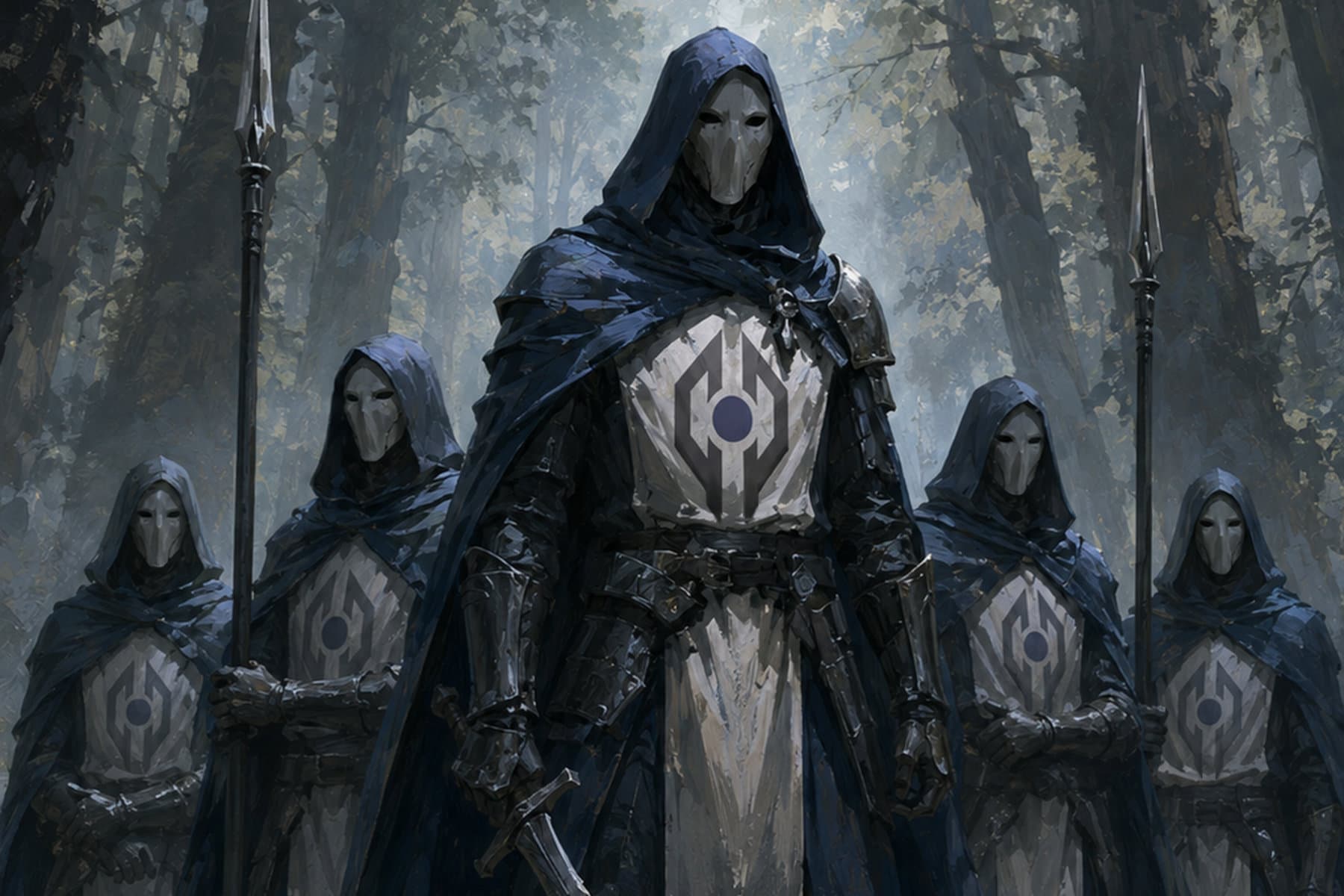
An order forged to stand where the Veil weakens and the world begins to fracture. Their authority reaches far beyond the creatures they are sworn to hunt.
Open Record
faction
Sanctum Ash
The priesthood of the Aurents, tasked with purification, ritual reclamation, and deciding what may remain after judgment.
Open Record
faction
The Ember Chain
An order of public judgement and ritual fire, where punishment becomes spectacle and obedience is forged through fear.
Open Record
Clearance I Required
The Whisperbrand
Not all Aurent judgements are delivered in fire or blood. Some leave no witnesses, only altered testimony, missing records, and memories that no longer agree. Further examination requires authorised Archive access.
View Sealed RecordSelected Archive Images
Gallery