Soulmark Classifications
The Eight Paths
The eight recognised soulmark Paths and the doctrinal framework used to interpret their forms, purposes, reputations, and burdens.
“Eight sigils were given, and each believed itself the centre.”
Conclave Commentary on the First Masking
In Arynbel, a soulmark is more than a divine brand. It is identity, vocation, expectation, and burden carved into living flesh. To interpret a soulmark is to interpret the outline of a life within the Weave. Temple scholars, Conclave archivists, and even Veilbound heretics have all developed shared methods through which each Path may be examined, named, and debated.
Though interpretations differ across institutions, regions, and centuries, the structure of study remains largely consistent. The same questions appear consistently in temple records, legal registries, battlefield accounts, and forbidden manuscripts. What does the mark look like? What nature does it suggest? What purpose was it believed to serve? How has it shaped the bearer’s place in Arynbel, and how has Arynbel, in turn, shaped the meaning of the mark?
The following sections appear in every Path entry. Together, they form the accepted framework through which soulmarks are studied, taught, feared, and remembered. Some categories reflect official doctrine. Others preserve social belief, historical pattern, or observations too persistent to dismiss. Taken as a whole, they reveal that a soulmark is never merely a symbol upon the body. It is a force that reaches into every layer of life, from private temperament to public duty, and sacred interpretation, to common superstition.
To study the Eight Paths, is not simply to study marks. It is to study the kingdom that was built around them, the faith that sanctified them, the people shaped by them, and the fractures now spreading throughout.
The Eight Known Paths
Each soulmark aligns with one of the Sacred Paths, spiritual archetypes believed to reflect Elara’s divine design. These paths shape not only calling, but often status, expectation, and destiny:
| Path | Mark Style | Common Placement | Glow COlour |
|---|---|---|---|
| The Crown | Concentric rings, raised nodes | Nape, sternum | Royal Purple with pearl shimmer |
| The Blade | Sharp, angular runes, weapon edges | Shoulder, forearm | Silver-White with Steel-Blue edging |
| The Flame | Spiraling sigils, sunburst patterns | Chest, hands | Amber-Gold with ember flickers |
| The Veil | Fractals, veined lines, asymmetry | Neck, temple, palms | Violet-Blue with black fractals |
| The Thorn | Barbed curls, tightening spirals, hooked lines | Lower back, ribcage | Deep Crimson or Rust-Brown |
| The Root | Tree-branch arcs, growth rings | Spine, thigh | Stone-Green or Bronze-Gold |
| The Tide | Flowing waveforms, mirrored curves | Ankles, wrist | Cerulean Blue with glimmering trails |
| The Pale Sigil | Unstable, shifting geometry | Unconfirmed | Unstable Grey, Pearl-Ash or Pallid Silver |
Recorded placements and visible characteristics represent commonly observed patterns, not fixed rules. Soulmarks vary between individuals in location, geometry, and expression, even among bearers of the same Path.
Marked Form & Visible Signs
In Arynbel, a soulmark is not regarded as decoration, omen, or mystical curiosity. It is treated as visible proof that a life has been read by the Weave and placed into pattern. From the first moment a mark presents in Arynbel, a soulmark is not regarded as decoration, omen, or mystical curiosity. It is treated as visible proof that a life has been read by the Weave and placed into pattern. From the first moment a mark is revealed beneath moonlight, it becomes a text others attempt to interpret. Midwives record its shape. Temple scribes note its placement. Families begin to speak differently around the child who bears it. Even before personality emerges, the mark begins to speak on the bearer’s behalf.
Its geometry is believed to reveal the grammar of divine intention. Angular marks are associated with force, resolve, severance, or direct action. Spiral and concentric forms suggest continuity, hierarchy, return, or containment. Branching lines imply growth, inheritance, divergence, or burden shared across many lives. Fractured asymmetry, rare within sanctioned doctrine, is often treated with suspicion, as though the mark carries stress from some unseen flaw in the pattern. In orthodox teaching, no line appears without meaning. Every curve, interruption, flare, and mirrored segment is considered deliberate.
Placement carries equal weight. A mark over the sternum is read differently than one along the throat, temple, palms, or spine. The body is not treated as random surface, but as sacred terrain. Marks near the hands imply action or transmission. Marks near the eyes or brow suggest perception, judgement, or spiritual strain. A mark upon the back or spine may be read as burden, support, or endurance. One etched along the ribs may suggest inward tension, hidden role, or guarded instinct. Entire schools of glyph-reading emerged not only to classify the Paths, but to compare how placement refines meaning within the same Path.
In exceedingly rare cases, a bearer may manifest a double soulmark. This does not mean two different Paths, which orthodox doctrine rejects as impossible, but rather two instances of the same mark appearing upon the body. Most commonly these paired marks manifest close together, as though the same divine pattern has echoed or reinforced itself within a single region of flesh. More rarely, they appear on separate parts of the body entirely, sometimes with one more pronounced than the other, and sometimes with both revealing themselves only under strong moonlight. Such cases are the subject of intense theological and archival debate. Some scholars interpret them as signs of intensified purpose, doubled burden, or unusual favour. Others regard them with unease, questioning whether repetition reflects abundance, instability, or strain within the Weave itself.
Glow is the final proof of legitimacy. In daylight, a soulmark may resemble fine scarring, old ink, or pale etching beneath the skin. Under moonlight, however, the truth of a mark reveals itself in colour, intensity, and pulse. The glow is said to be resonance made visible, the Weave surfacing through mortal flesh. True marks do not merely shine. They answer. Some brighten with emotion, others sharpen in sacred spaces, and a rare few seem to flare in the presence of Echo or great strain. In the rare case of double soulmarks, both marks typically answer in the same hue and Path resonance, though surviving records disagree on whether they always flare in unison. Forged marks fail most visibly here, for while geometry may be imitated, resonance rarely survives close scrutiny beneath moonlight or ritefire.
This section establishes the visible body of the mark before any deeper meaning is assigned to it. It records form, placement, colour, and behaviour under light, along with the physical traits that distinguish true soulmarks from false ones. It also accounts for rare irregular manifestations, including the scarcely documented phenomenon of doubled marks of a single Path. In Arynbel, one does not begin with philosophy. One begins with what can be seen. Without that foundation, all further interpretation risks becoming projection, fear, or convenience dressed as faith.
Core Nature
If the mark is the outer script, the core nature of the bearer is the inward pattern the mark leaves. Across centuries of temple records, battlefield accounts, marriage ledgers, confessions, and oral testimony, certain tendencies appear again and again among those who carry the same Path. These tendencies are not treated as laws, yet in practice they are often regarded that way. A soulmark may not command the mind, but Arynbel has long assumed the mind leans upon it.
Some Paths are associated with immediacy, decisiveness, and instinctive motion. Others recur among those inclined toward patience, contemplation, secrecy, or emotional depth. Certain marks seem to produce individuals who hold order naturally, while others gather those who question, disrupt, absorb, or endure. The language used to describe these patterns is often revealing. Temple doctrine calls them virtues of alignment. Critics call them habits formed beneath expectation. Families often call them fate before the child has had time to become anything else.
This section explores recurring emotional posture as much as behaviour. Does the bearer tend toward restraint or expression, solitude or communion, obedience or reinterpretation? Do they stabilise a room when they enter it, unsettle it, sharpen it, soften it, or force it to become honest? These are the kinds of traits Arynbel records with near-ritual seriousness. Not because all bearers are identical, but because the culture has learned to watch them as though confirmation of behaviour is inevitable.
There is deep tension in this category. Core Nature may describe something true, but it may also describe a life shaped under relentless reinforcement. A child raised from infancy as a future judge, soldier, healer, or seer rarely grows untouched by the recognition of their soulmark. Thus every Path carries not only inherent reputation, but accumulated pressure. Over time, this makes it difficult to tell whether the mark reveals temperament or whether society trains the bearer into resemblance.
Whether innate, imposed, or some inseparable mixture of both, the pattern remains central to how soulmarks are understood. Arynbel does not simply ask what a mark looks like. It asks what sort of person follows from it, and too often mistakes preconceived expectation for revelation.
Divine Purpose
In orthodox doctrine, a soulmark cannot be separated from function. To bear a Path is not merely to display divine artistry, but to participate in a role within the greater architecture of existence. The Weave is understood as structured, layered, and intentional, and each Path is framed as one necessary expression of that design. No mark is said to exist for itself. Every mark exists in relation to divine order.
Divine Purpose records how the Conclave and earlier faith traditions define that role. Some Paths preserve life, some direct institutions, some carry memory, some protect borders, some interpret signs, and some enact necessary violence in service of stability. These purposes are presented not as careers but as spiritual stations. A bearer may resist their place, but the mark is said to reveal what the soul was shaped to do long before birth. To accept one’s purpose is praised as harmony. To reject it is treated as strain against the Weave.
Scripture, temple commentary, trial records, and royal precedent all feed this section. Over generations, every Path accumulates theological justification: verses that glorify it, warnings that temper it, rituals that sanctify its expression, and restrictions meant to prevent deviation. These are never neutral. Divine Purpose is the point at which interpretation hardens into authority. Once a Path has an official role, institutions begin arranging themselves around it. From there, faith becomes law, and law becomes inheritance.
Yet this category is never entirely stable. Elara no longer speaks. Soulmarks flicker. The Weave thins. In such an age, the old certainty surrounding divine intention has become harder to sustain. Some still insist each Path holds its original sacred purpose unchanged. Others suspect the marks remain while the design behind them has fractured. A few heretics go further and ask whether purpose itself was ever divine, or merely declared so by those who benefited from its clarity.
Even so, the official frame endures. Arynbel continues to teach that each Path exists for a reason, and that understanding that reason is necessary not only for the bearer, but for the kingdom that still clings to the idea that fate retains a pattern.
Social Role in Arynbel
A soulmark may begin in flesh, but it never remains private. The moment it is recognised, it enters the machinery of society. Registries are updated. Families reconsider futures. Teachers alter expectations. Priests assign relevance. Guilds, courts, military orders, and noble houses all respond as though the mark were both biography and contract. In Arynbel, social role is one of the clearest examples of belief made structural. The mark is read, and then the world rearranges itself around that reading.
This section examines the practical consequences of a Path within ordinary and institutional life. Which professions welcome it? Which rites are reserved for it? Which inheritances become more likely or impossible because of it? Some Paths carry prestige in nearly every region. Others are desirable only in certain cities, factions, or religious contexts. A mark that elevates one family may isolate another. Social value is never distributed evenly, and that inequality reveals much about the kingdom itself.
Marriage, apprenticeship, guardianship, and legal standing are all shaped here. Certain Path pairings are praised as harmonious, others regarded as unstable or politically dangerous. Some guilds interpret Path alignment as proof of competency before any skill is shown. Certain rural regions may prize one mark more than the capital does, while courtly environments may dismiss traits essential to survival elsewhere. Over time, each Path becomes entangled not only with purpose, but with class, access, and control.
This also means that social role often exceeds doctrine. A Path may be described one way in temple teaching and lived another way in the marketplace, on the frontier, or under wartime strain. When the realm is stable, marks tend to reinforce the hierarchy already in place. When the realm fractures, those same marks become fault lines. Privilege sharpens. Suspicion deepens. Old assumptions turn punitive. In such moments, the social function of a mark can become more decisive than its theology.
To study a Path without studying its role in Arynbel would leave the work incomplete. A soulmark does not merely describe a person. It determines how the world meets them, rewards them, confines them, and remembers them.
Cultural Perception & Superstition
Doctrine may define what a Path should mean, but common belief determines how it is actually felt. Across Arynbel, every soulmark carries sayings, rumours, omens, taboos, and half-remembered stories that drift far beyond official scripture. Midwives murmur warnings over certain glows. Soldiers carry quiet prejudices into camp. Sailors, farmers, merchants, widows, and children all preserve interpretations that no archive would admit, yet no scholar can ignore.
This section gathers the unofficial life of a Path. It records proverbs spoken in kitchens and barracks, folk practices meant to attract or ward certain bearers, regional sayings that treat one Path as blessing and another as trouble, and common assumptions repeated so often they become social truth. Some of these beliefs are tender. Others are cruel. Many contradict temple teaching outright. Yet even contradiction has value, for it reveals what people fear more than what they formally worship.
Superstition often gathers where knowledge thins. The rarer a Path, the more story accumulates around it. Strange glows, unusual placement, unstable flaring, or marks associated with old disasters tend to attract myth rapidly. Entire villages may alter behaviour around a child for reasons no doctrine supports. A mark can become marriage omen, harvest sign, battlefield warning, or proof that a household is favoured or cursed. These beliefs rarely remain harmless for long. What begins as folk caution can become exclusion, obsession, or violence.
Cultural perception also shifts by region and era. A mark associated with heroism in one age may become feared in another if history leaves behind the wrong memory. Rural superstition differs from courtly gossip. Aurent processional belief differs from Veilbound whisper tradition. Mourning Flame interpretation can invert Conclave values entirely. In this way, a Path is never held inside one meaning. It moves through the kingdom as symbol, and symbols are always unstable.
To record only scripture would flatten the truth. Arynbel is not ruled by doctrine alone. It is ruled by what people repeat to one another when the temple doors are closed and the moon is bright enough to make every old fear seem reasonable.
Mark Behaviour & Evolution
Though described as fixed, a soulmark is not static. It does not remain unchanged from birth to death like an inert emblem stamped upon the body. Over time, marks may deepen, sharpen, flare, thin, dim, or become more difficult to read, especially when the bearer moves through periods of strain, devotion, conflict, doubt, or transformation. Arynbel has long understood that while the Path itself remains constant, the mark’s behaviour reflects the life passing through it.
This section records how marks respond across circumstance. Some brighten in battle or leadership. Some intensify during healing, oath-taking, prayer, or grief. Others appear to tighten or darken under prolonged fear, suppression, or spiritual fracture. Rare accounts describe marks that widen along existing lines after great revelation, as though the original pattern were surfacing more fully. Other records speak of thinning geometry, unstable pulse, or temporary discolouration following trauma, Echo saturation, or Veil exposure. These changes do not necessarily mean the Path has altered, but they do suggest that resonance is never wholly dormant.
Temple scholars historically treated such developments as diagnostic. A healthy mark was thought to display harmony between bearer and divine function. A strained mark suggested inner resistance, corruption, deception, or external interference. In the present age, however, this certainty has weakened. Since soulmarks across Arynbel now flicker, fade, and behave unpredictably in ways once considered impossible, older standards no longer hold cleanly. What was once called deviation may now be part of a broader unravelling, which is affecting the kingdom itself.
Forged marks are also examined here, not only as false geometry but as behavioural failure. Even convincing forgeries tend to break under sustained observation. Their light may lag, pulse inconsistently, refuse sacred amplification, or collapse entirely when exposed to moon verification, ritefire, or emotional strain. Some distort as if the lines cannot agree on their own shape. Others remain too still, a fault nearly as revealing as instability. A true mark reacts because it lives in tension with the bearer. A false one imitates life without belonging to it.
For this reason, mark behaviour is never treated as mere ornament. It is evidence. The soulmark may not possess a voice of its own, but across centuries of record, Arynbel has learned to treat its changes as testimony.
Archive Filing
First Vault Registry
Foundational Doctrine / Soulmark Path Classification
V1-LOR-SMK-010

Explore This Record
Archive Contents
Continue deeper into the records associated with this subject.

lore
The Crown
A rare Path of authority and burden, associated with judgement, hierarchy, and the responsibility of holding order together.
Open Record
lore
The Blade
A martial Path of readiness and defence, shaped by decisive action, protection under strain, and the discipline required to wield force without becoming ruled by it.
Open Record
lore
The Flame
A Path of intensity and transformation, where healing, ritual, conviction, and purification share the same fire that can warm, refine, or consume.
Open Record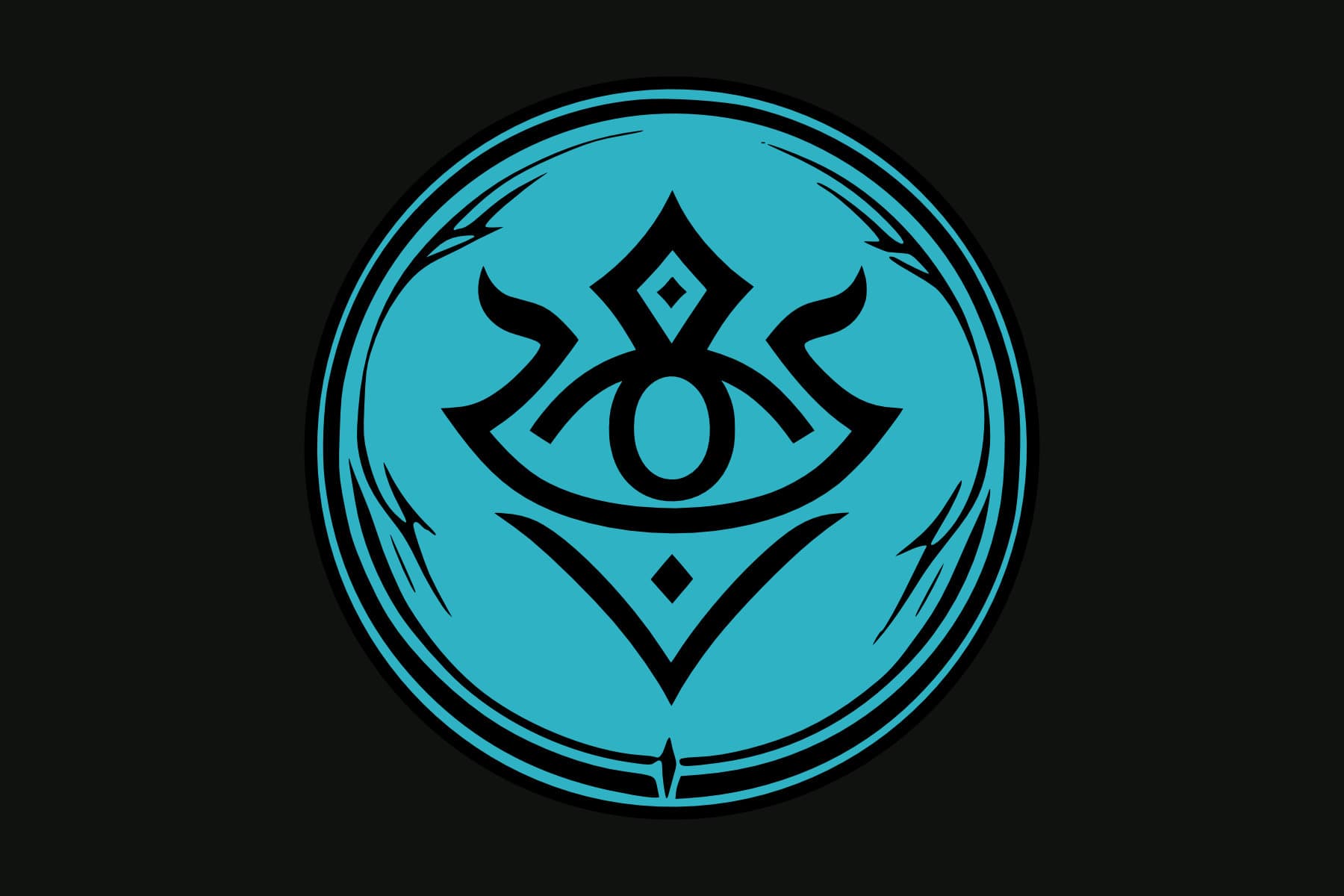
lore
The Veil
A rare Path attuned to thresholds and unseen instability, whose bearers often sense approaching disturbance before others recognise that anything is wrong.
Open Record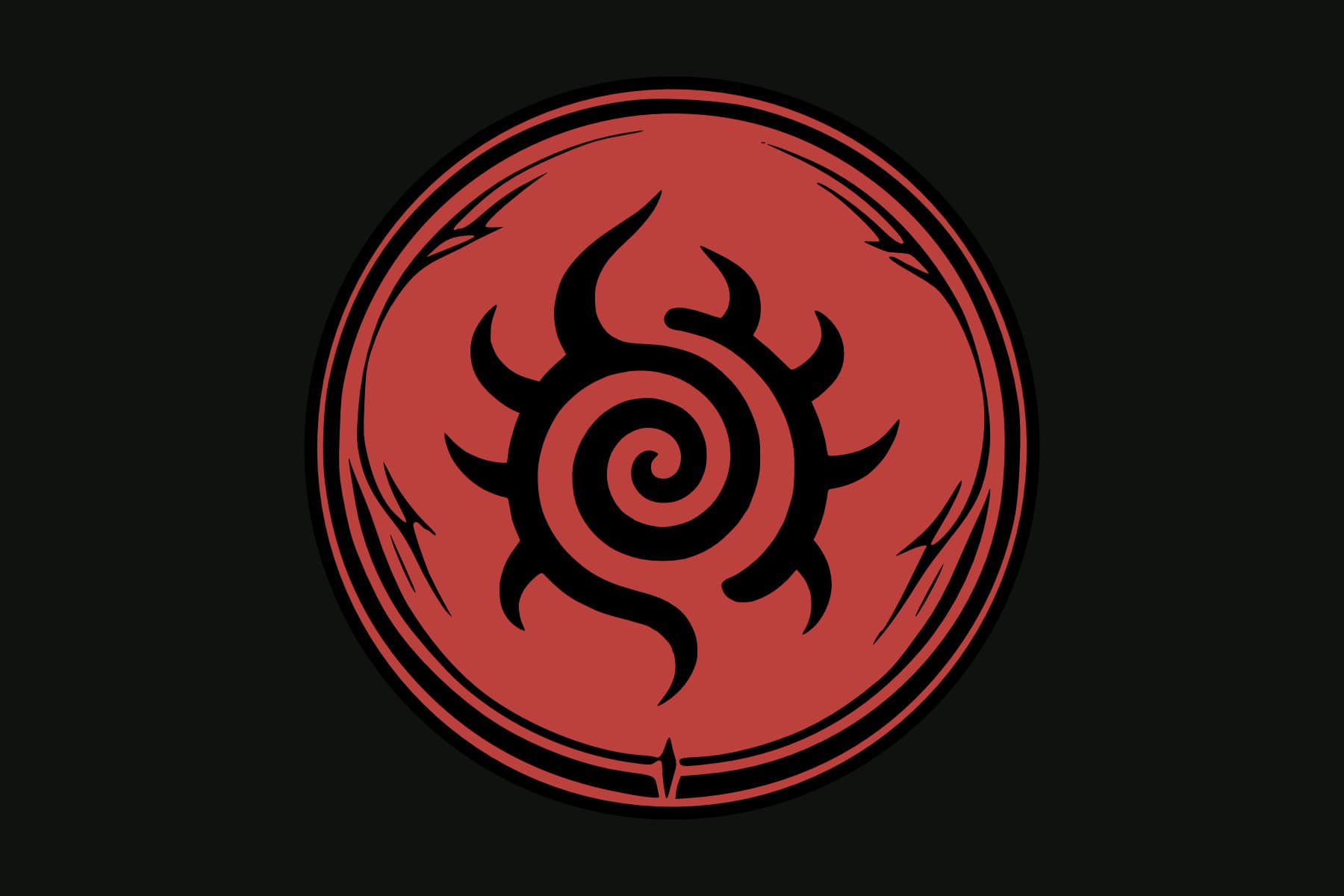
lore
The Thorn
A guarded Path of caution and survival, shaped by subtle awareness, concealment, and the instinct to recognise danger before it fully reveals itself.
Open Record
lore
The Root
Arynbel’s most common Path, associated with endurance, stewardship, labour, land, and the quiet continuity that keeps communities alive.
Open Record
lore
The Tide
A Path of movement and memory, associated with travel, story, emotion, exchange, and the currents that carry experience between people and places.
Open Record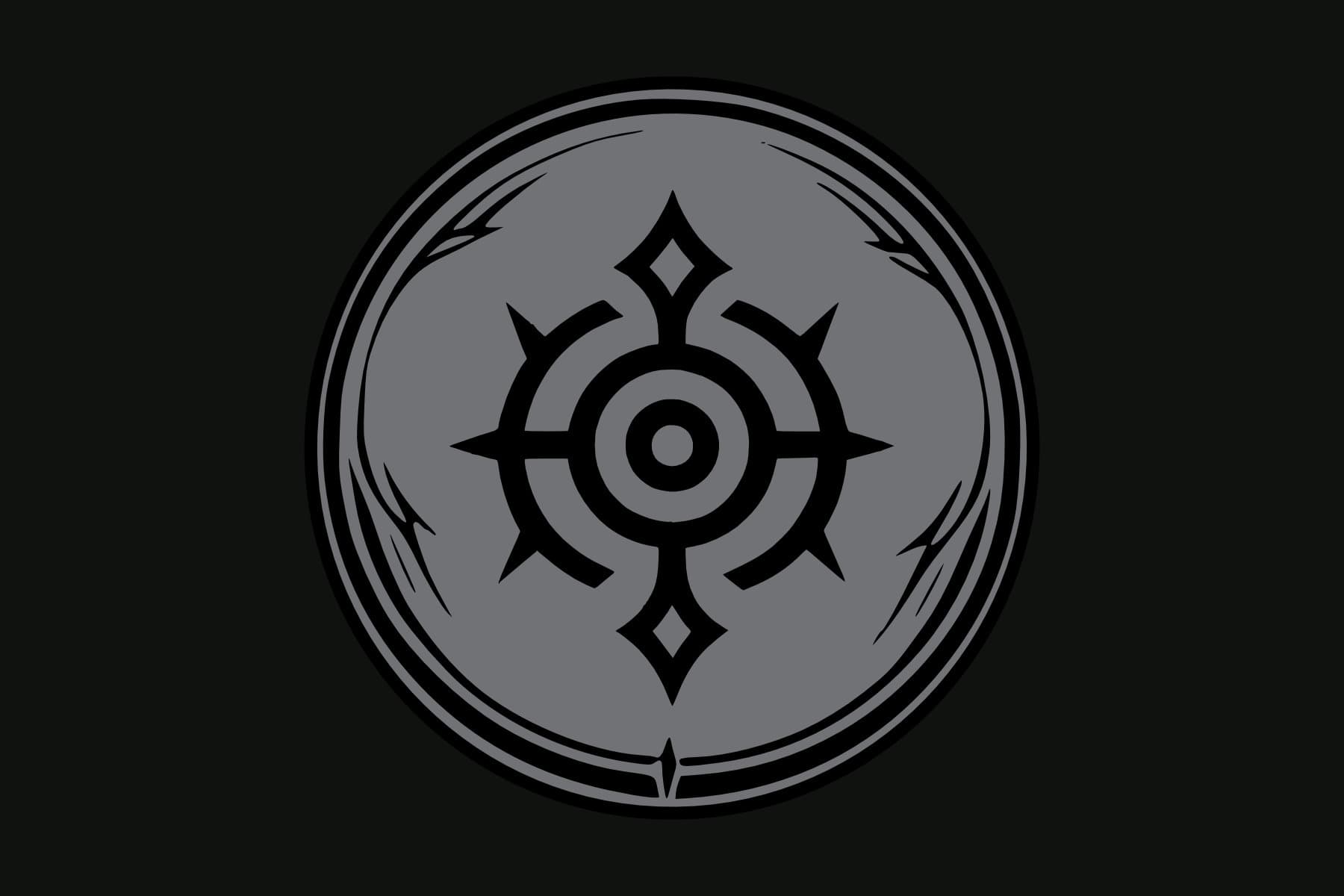
Clearance I Required
The Pale Sigil
The eighth Path is recognised, though rarely spoken of openly. Unlike the stable soulmarks, the Pale Sigil refuses a fixed form, its shifting geometry and uncertain purpose troubling even the Conclave's most established teachings. Further examination requires First Vault clearance
View Sealed Record